· Dave Mathias · Ideas · 5 min read
AI Can Give You More Time With Customers. Will You Use It That Way?
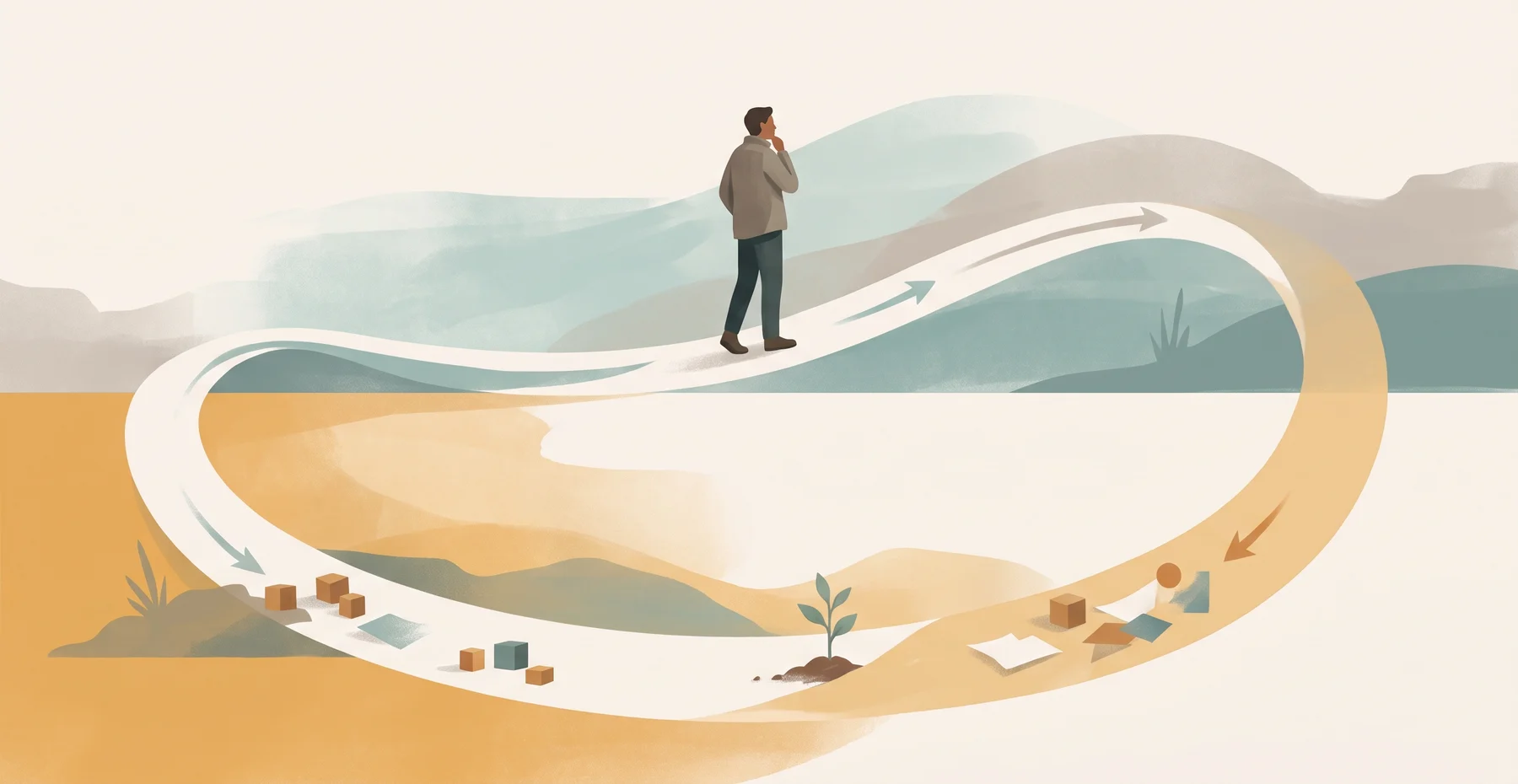
AI can reduce the work around customer discovery. The harder question is whether product teams will use that capacity to get closer to customers or simply produce more.
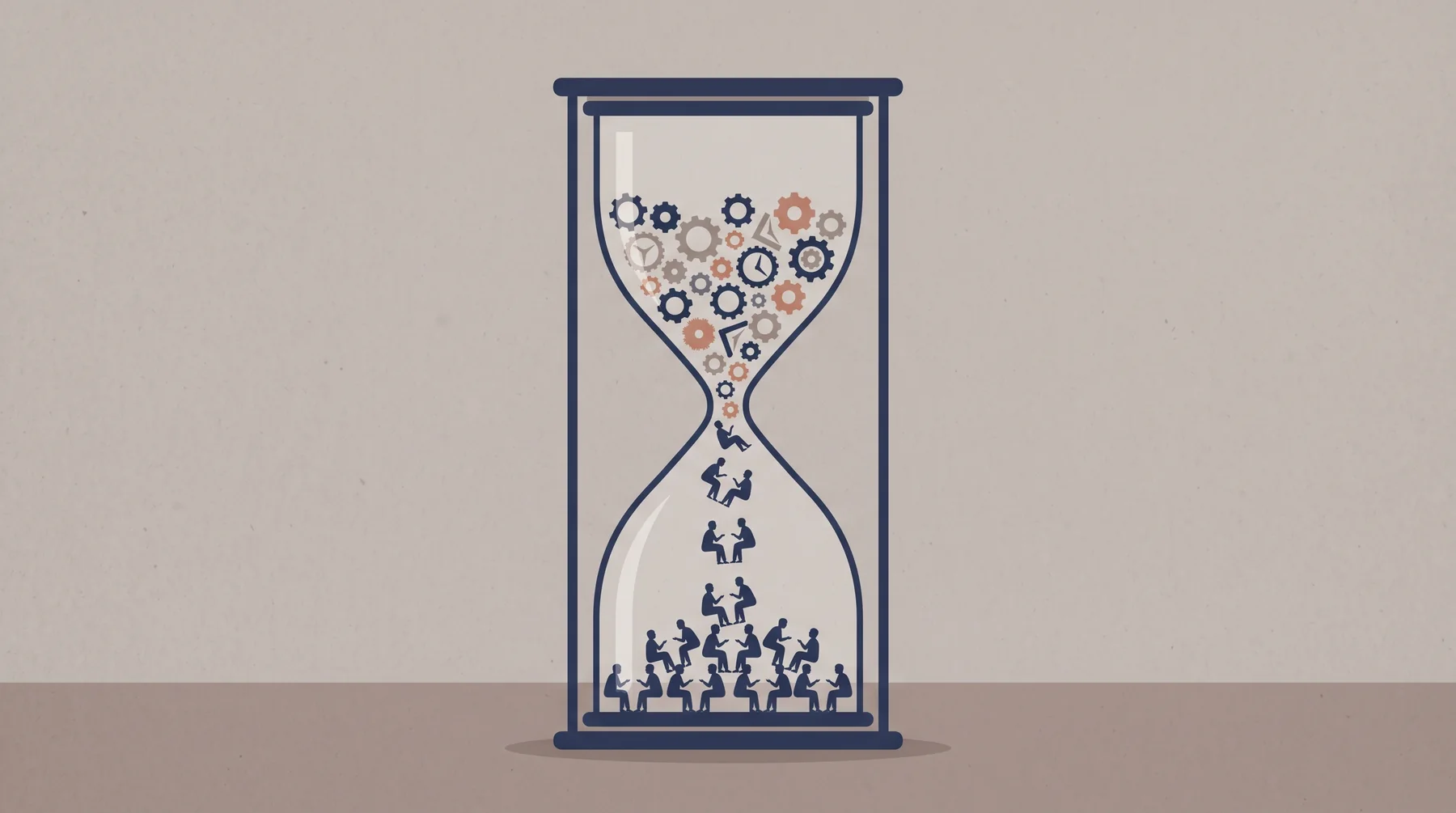
Most teams will feel pressure to produce more.
More requirements. More tickets. More presentations. More status updates.
The team moves faster, but it may still be moving with a weak understanding of the customer.
That is not only a failure of intention. It is often what the organization rewards. If leaders measure output, roadmap progress, and utilization, every hour AI saves will be pulled toward more output.
Efficiency only improves product decisions when some of the recovered time is deliberately reinvested in learning.
The summary was right, but the conclusion was wrong
Consider a growth-stage health tech startup trying to improve activation for a care-navigation product.
The data showed that many patients completed enrollment but did not take the next step. The working assumption was that the onboarding process was confusing. The product team planned to simplify the screens and reduce the number of questions.
AI helped the team prepare for customer interviews. It assembled relevant account history, drafted a discussion guide, transcribed the conversations, and produced initial summaries.
One summary described a patient as having difficulty understanding the next step. That was accurate, but incomplete.
During the conversation, the patient paused before asking who could see the information she entered. She wanted to know whether it would be visible to her employer or insurance company. The product manager stayed with the question rather than returning to the interview guide.
The problem was not simply usability. It was trust.
That distinction changed the decision. Instead of only simplifying the workflow, the team clarified how patient information would be used, moved the explanation earlier, and scheduled additional conversations to learn whether the concern was more widespread.
AI reduced the work surrounding the interview. It helped the team organize what it heard. But the value came from a person recognizing which moment deserved another question and taking responsibility for what the team concluded.
Remove the work around the conversation
Think about everything that happens before and after a customer interview.
You research the account. Review prior conversations. Draft a discussion guide. Coordinate the session. Take notes. Clean up the transcript. Pull out themes. Share what you learned. Update the team’s understanding.
The conversation may take 45 minutes. The work around it can take several hours.
AI can cut a meaningful share of that preparation and synthesis time. It can prepare a concise account brief, find open questions in past research, draft an interview guide, transcribe the session, and create a first-pass summary. It can compare the conversation with earlier interviews and identify statements that deserve a closer look.
That does not remove the need for a skilled researcher, product manager, or other team member. It removes part of the administrative burden that prevents them from doing more of the human work.
AI also does not solve customer access. It cannot make customers available, create trust, or give a team the courage to test an assumption it would rather protect.
It can make acting on that curiosity less expensive.
Reinvest the time on purpose
Saved time does not stay unclaimed.
If product leaders do not decide where it goes, the backlog will decide for them.
Before introducing an AI workflow, decide what the recovered capacity is for. If the team saves five hours on preparation, notes, and synthesis, reserve part of that time for another conversation, a better follow-up, or a review of the evidence behind an important decision.
Put it on the calendar before it disappears.
This requires leaders to accept a visible tradeoff. A product manager spending an afternoon with customers may close fewer tickets that week. A designer joining a follow-up interview may delay a deliverable. An engineer listening to a customer may spend less time writing code.
If the organization says customer understanding matters but rewards only output, output will win.
AI does not change that incentive. Leadership does.
Keep responsibility with the people making the decision
AI can help interpret a conversation. It cannot take responsibility for the decision that follows.
A transcript is a partial record. A summary is an interpretation of that record. Neither transfers judgment from the person who was there.
The people making the decision still need to ask what mattered, what remains uncertain, and what deserves another conversation. They need to challenge a clean summary when the underlying evidence is messy. They also need to know when they are hearing a real pattern and when they are reacting to one memorable customer.
In health tech and other sensitive settings, that responsibility extends to how the research is handled. Teams need clear rules about consent, customer information, recordings, and which material may be processed by an AI system.
The goal is not to remove people from discovery. It is to remove enough surrounding work that they can participate more fully.
Measure whether learning reached a decision
I would not measure the value of AI in discovery by the number of summaries it produces.
I would start with one question:
What did the team confirm, revise, delay, or stop because of what it learned from customers?
That is the outcome.
A few leading indicators can tell you whether the conditions for learning are improving:
- How many team members had direct customer contact?
- How quickly did an important question reach a customer?
- Did the team hear from more than its easiest or loudest customers?
- How often did someone return to confirm an interpretation?
- Where did a person challenge or correct the AI-generated synthesis?
Those measures are useful, but they are not the goal. A team can conduct more interviews and create more research artifacts without allowing any of it to affect the work.
Customer discovery matters when customer evidence enters the decision.
AI can create capacity. It cannot decide what that capacity is for.
One Good Question
If AI gave your product team five hours back next week, what would your organization reward them for doing with it?
- Artificial intelligence
- Customer discovery
- Product management
- Human judgment
Newsletter
Get Good Option
Product decisions, customer learning, and practical AI. Every other Tuesday.