· Dave Mathias · Ideas · 7 min read
Give Reality Edit Access
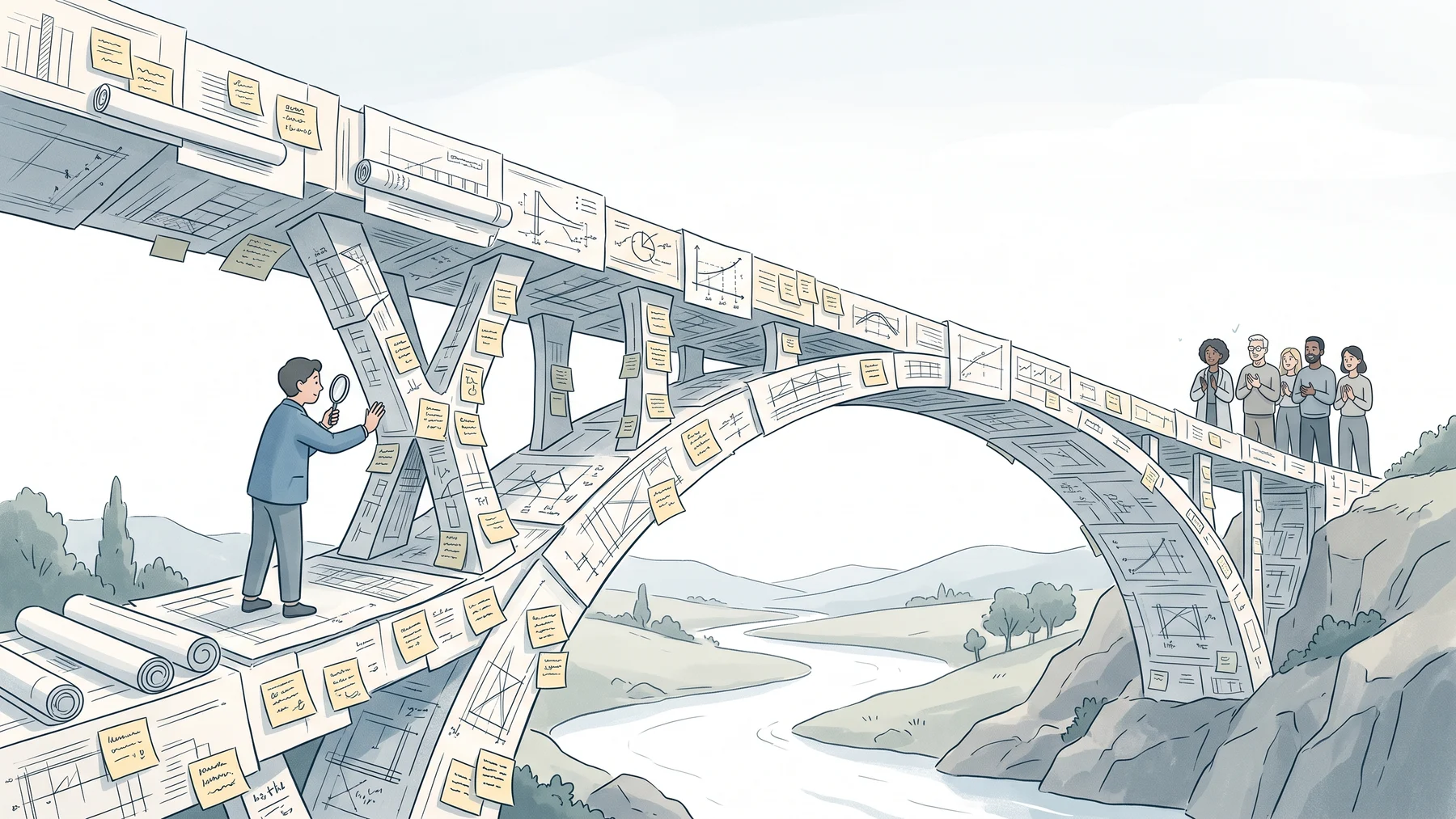
A useful plan creates a disciplined way for reality to revise it. Give teams a way to test assumptions, respond to evidence, and keep commitments current.
When the plan stops moving
A plan can be wrong in two very different ways.
It can be careless: vague goals, missing dependencies, imaginary capacity, no owner.
Or it can be beautifully constructed and slowly become false.
The second kind is harder to notice. The dates remain precise. The roadmap still has colors. The assumptions sound settled because they were settled once. New evidence arrives, but the plan has acquired the authority of a fact.
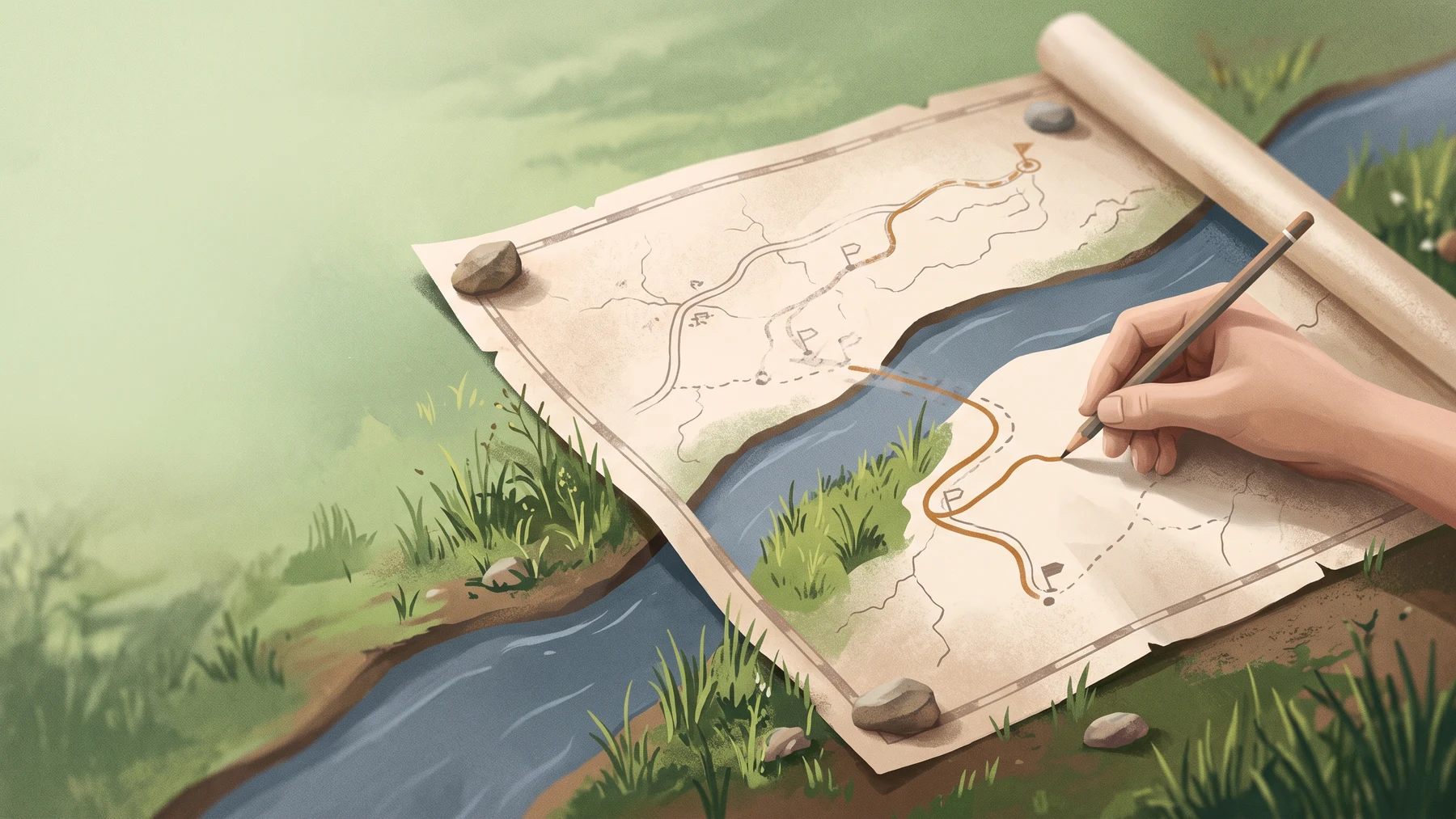
That is when planning stops helping. The team begins managing the map instead of responding to the terrain.
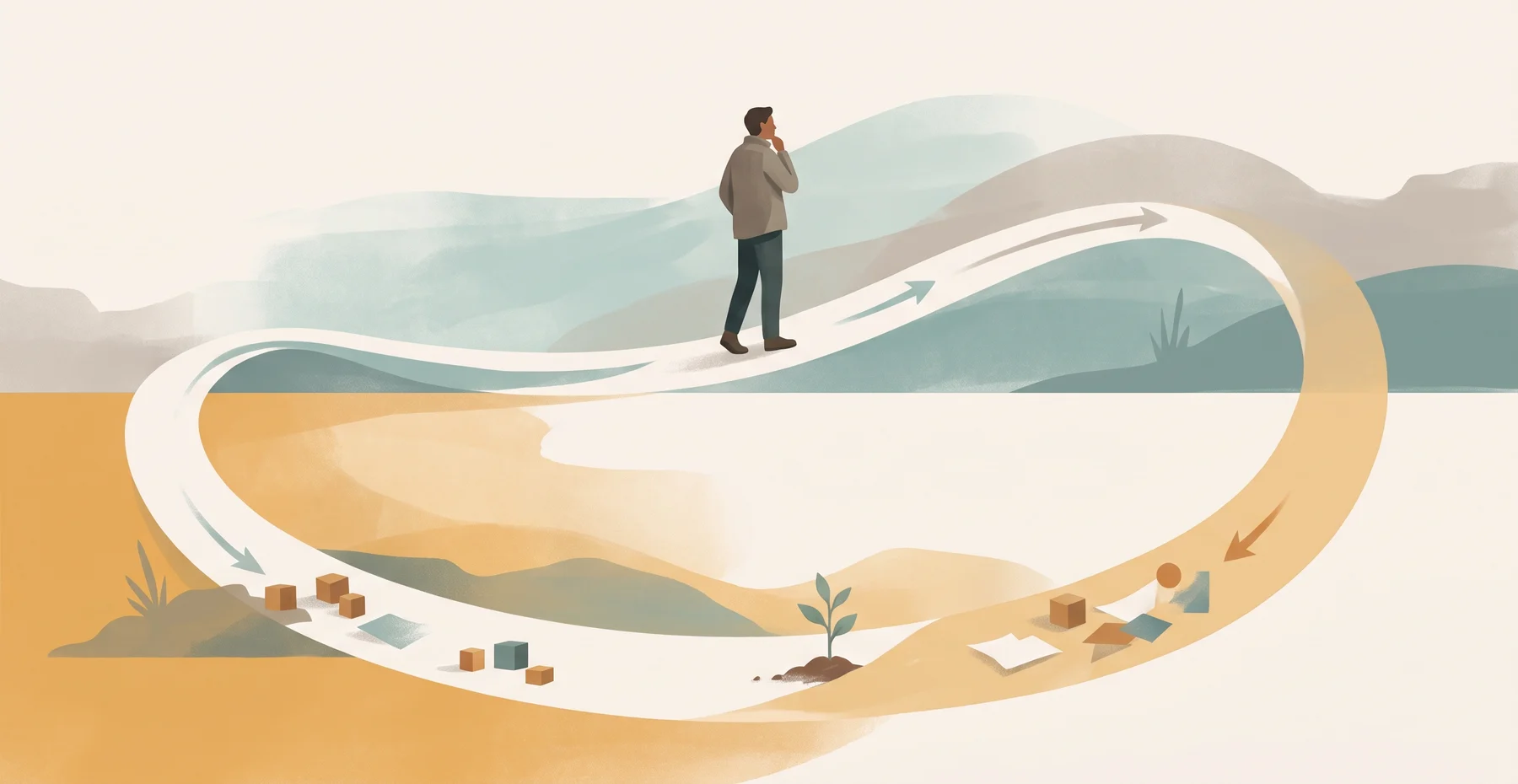
A useful plan does more than describe an intended future. It creates a disciplined way for reality to revise that future.
A $50 billion plan meets its users
The U.S. Department of Veterans Affairs began deploying a new electronic health record system in 2020. It was an enormous undertaking: one system intended to connect care, records, workflows, and facilities across a national healthcare network.
Then the system met the work.
Users reported safety concerns, performance problems, and workflows that made their jobs harder. In April 2023, the VA paused further deployments after the system had reached five medical centers.
The pause created room for contact with reality. During the following 20 months, the VA implemented more than 1,500 configuration changes. It improved patient-safety features, pharmacy functions, system performance, and the handling of trouble tickets.
But the evidence did not point in only one direction. About 1,800 configuration requests were still unresolved as of February 2025. In a September 2024 survey, 75 percent of responding users disagreed or strongly disagreed that the system made them as efficient as possible.
Meanwhile, the plan itself had not caught up. The Government Accountability Office reported in March 2025 that the VA had not updated its lifecycle cost estimate or rollout schedule to reflect the long pause and the changes made during it. An earlier independent estimate put lifecycle costs at $49.8 billion.
This is not a story about planning too much or listening too little. It is about the connection between them.
User feedback changed the system. The pause changed the sequence. The unfinished work changed the likely cost and timing. A useful plan had to absorb those facts without abandoning the need for a cost estimate, a schedule, and an accountable path forward.
Reality did not make planning less necessary. It made replanning unavoidable.
Plans are claims, not scenery
We often talk about a plan as if it were a route drawn from the present to a destination.
That metaphor hides something important. A plan is actually a collection of claims:
- This problem is worth solving.
- These actions will move us toward the outcome.
- These people and resources will be available.
- These dependencies will hold.
- This sequence is better than the alternatives.
- The world will remain stable enough for the work to matter.
Some claims are explicit. Most are not.
The more polished the plan becomes, the easier it is to forget that these are hypotheses about a future nobody has visited. Precision can improve coordination, but it can also disguise uncertainty. A date in a spreadsheet looks more factual than the chain of assumptions beneath it.
This is why “plans are useless” is the wrong lesson. Organizations need plans to coordinate work, expose constraints, allocate money, and make commitments visible. The VA’s outdated estimates did not create flexibility. They weakened the information leaders needed to budget and judge progress.
The U.S. Army makes the distinction clearly in its operations doctrine. Planning helps people build shared understanding and coordinate action, while assessment is continuous. The point is not to choose between a plan and adaptation. The plan provides a common starting point for adaptation.
A plan fails when it becomes scenery: always visible, rarely questioned, and no longer connected to the decisions people are making.
Contact is not the same as correction
Many teams have added more opportunities for reality to speak.
They interview customers. Review analytics. Run pilots. Hold retrospectives. Track delivery risks. Invite frontline staff into demonstrations.
Yet the roadmap barely moves.
This happens because evidence and authority travel on different tracks. The research team can identify a false assumption but cannot change the funded commitment. A pilot can expose operational costs, but its sponsor is rewarded for expansion. A retrospective can name the same dependency every month while ownership sits elsewhere.
Contact without correction becomes its own kind of theater. The organization can say it is listening while protecting the plan from what it hears.
The opposite failure is equally real. Constant revision can destroy coordination. If every complaint changes direction, a roadmap becomes a queue of recent reactions. Teams need enough stability to build, customers need promises they can rely on, and leaders need a basis for allocating scarce resources.
The answer is not maximum flexibility. It is governed adaptability.
The UK government’s Service Standard treats iteration as a capability that must persist throughout a service’s life. Teams need the resources and technical flexibility to respond when user needs, technology, or policy changes. That does not mean every signal deserves a pivot. It means change must remain possible when the evidence earns it.
The difference is a revision mechanism: an agreed way to decide which facts should alter which commitments.
The plan-reality interface
We tend to inspect the contents of a plan: goals, dates, milestones, risks, and owners.
It is just as important to inspect the boundary between the plan and the world.
A living plan has four parts at that boundary.
- Assumption: What must remain true for this part of the plan to make sense?
- Contact: Where and when will the work encounter evidence about that assumption?
- Authority: Who can revise the commitment when the evidence changes?
- Version: How will the new plan replace the old one so people know what now governs the work?
Assumption turns hidden certainty into a testable claim. “Deliver feature X in November” becomes “We believe solving this workflow is valuable enough to justify feature X, and the integration will be ready by November.”
Contact names the encounter with reality. It might be a customer using a prototype, an operator completing the new workflow, a vendor hitting an integration milestone, or a financial review revealing the true cost.
Authority prevents evidence from becoming an interesting attachment. Someone needs permission to change scope, sequence, funding, or even the intended outcome. If every revision requires reopening an executive decision, only emergencies will overcome the friction.
Version closes the loop. Quietly changing a slide is not replanning. People need to know what changed, why it changed, what remains stable, and which older commitment no longer applies.
These four parts do not require a new planning bureaucracy. For a small project, they can fit beside the roadmap:
- We believe…
- We will learn by…
- This person can change…
- The next version will record…
For a larger commitment, the same logic belongs in funding reviews, contracts, governance, and operating cadence. The GAO’s Agile Assessment Guide emphasizes early delivery, customer collaboration, and continuous adaptation because working increments reduce the chance of funding a solution that is failing or becoming obsolete.
The deeper point is not about agile software. Any plan that extends into uncertainty needs a way to learn without pretending that learning is a failure of planning.
Stability with a reason
The best plan is not the one that changes least. It is not the one that changes most.
It is the one whose stable parts remain stable for a reason and whose changing parts can change before reality makes the decision for you.
That requires two forms of discipline at once.
The first is commitment: decide what matters, coordinate action, and give the work enough time to produce evidence.
The second is revision: expose assumptions, create contact with the real work, distribute authority to respond, and keep one current version of the truth.
Planning earns trust when people can see both. They know which promises are firm. They also know which beliefs are still being tested and what would cause the plan to move.
Without commitment, the team drifts.
Without revision, the plan does.
One Good Question
Where has reality already changed your understanding, but not yet been allowed to change the plan?
- Planning
- Product leadership
- Decision making
Newsletter
Get Good Option
Product decisions, customer learning, and practical AI. Every other Tuesday.